
What Makes Orangutans Intelligent
Numerous studies in the wild and in captivity indicate that the great apes, chimpanzees, gorillas, and orangutans, are among the smartest land animals on the planet. The question is why… Continue reading What Makes Orangutans Intelligent
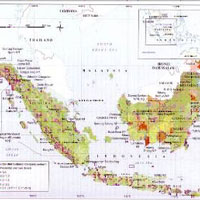
Orangutan Natural History and Socioecology
Orangutans are the only great ape outside of Africa and they are uniquely adapted to the tropical forests of Southeast Asia. During the Pleistocene, orangutans ranged throughout forests in Java, Sumatra, Borneo, Vietnam and southern China. As climate slowly changed over nearly 1.8 million years, the orangutan range shifted southward. Orangutan populations have declined dramatically, perhaps by as much as 97%, in the 20th century

Analyzing Hydrology in Tanjung Puting’s Peat Swamp Forests
It may seem strange to think of tropical forests and swamps together… but not to orangutans who call peat swamp forests home. The flooded river networks of Tanjung Puting National Park and Lamandau Reserve are key components of forest ecology. Without them, forests and fruit would be distributed differently, and so would orangutans and other species dependent on these unique ecosystem.

Climate, Forest Ecology and Orangutans
Indonesia consists of approximately 17,000 islands, interspersed with warm seas, strung out along the equator between mainland Asia and Australia. Indonesia’s wet tropical climate is characterized by seasonal changes in rainfall rather than temperature. Warm waters, which make up more than 80% of Indonesia, are responsible for the almost constant temperatures on land. Seasonal variation in Indonesia’s

Preserving Peatland Rainforest Saves Orangutans… and the Global Climate
Most rainforests in Borneo and Sumatra, home to the orangutan, are distributed on peatlands which are typically low, swampy areas that are seasonally flooded. These rainforests are like no others… Continue reading Preserving Peatland Rainforest Saves Orangutans… and the Global Climate